Hromnice Lake is a natural monument in the Plzeň-North District. Due to past slate mining, the lake’s water is a weak solution of sulfuric acid (its pH is 2.6–2.9). This is precisely why various sources describe it as having “sterile, lifeless water.” Even the official information board states: “… apart from algae, [the water] is completely devoid of life.” Given the immense adaptability of life in general, this conclusion seemed unlikely to me. So I decided to go there and investigate it for myself.

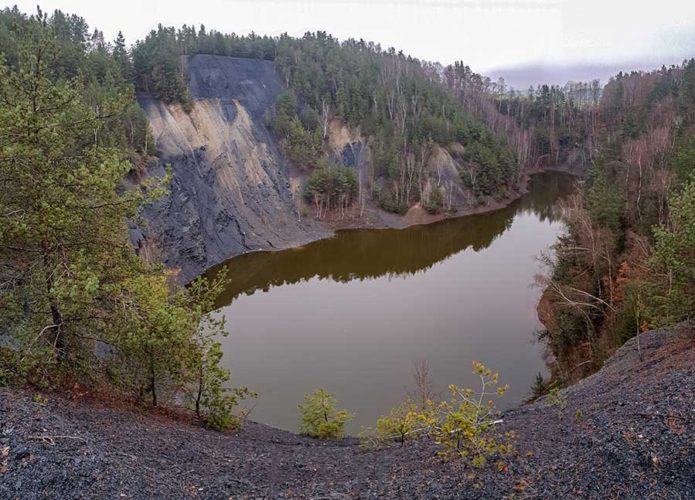
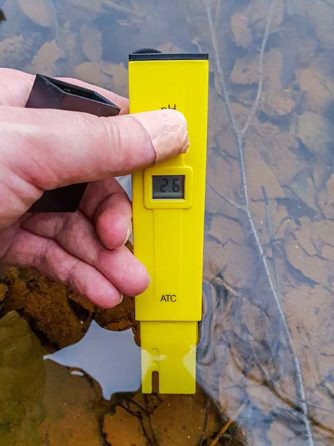
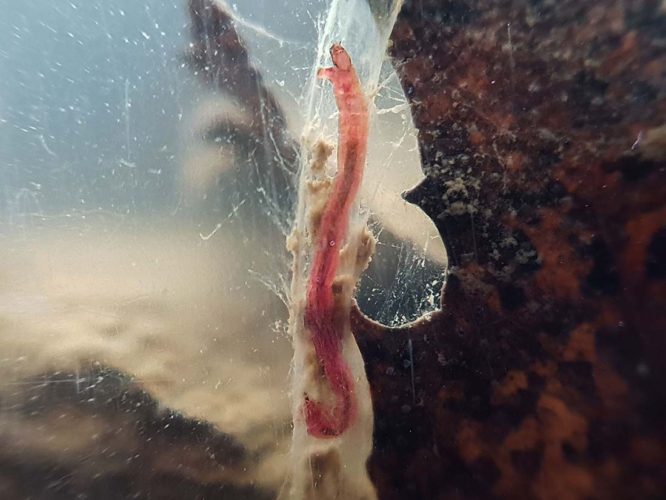
On December 19, 2020, I collected a water sample from Hromnické Lake. Multicellular life could be seen in it as soon as the silt settled in the murky water. I found several midge larvae in it.
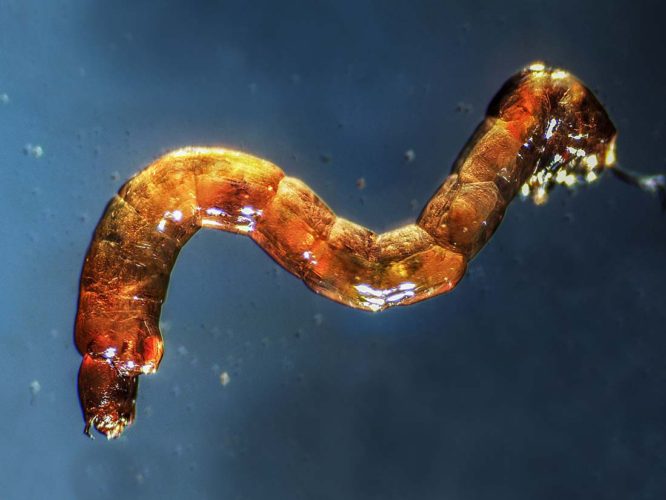
I also discovered a fly larva, which I was able to identify using a microscope.
I also found several single-celled organisms, such as these two species of dinoflagellates, which were so abundant that they could be seen with the naked eye as a green film on the surface.
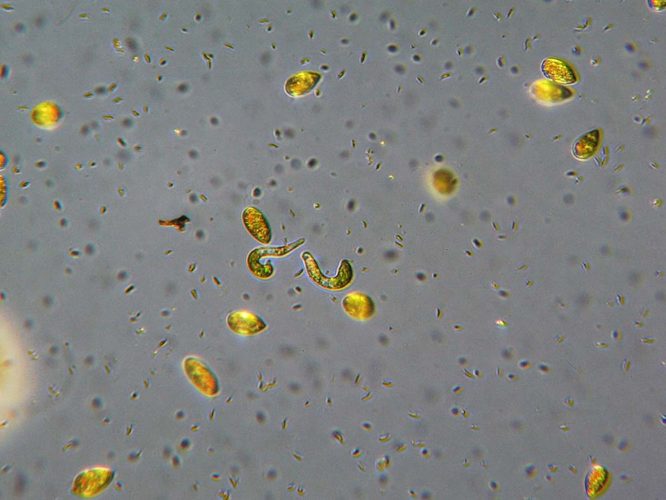
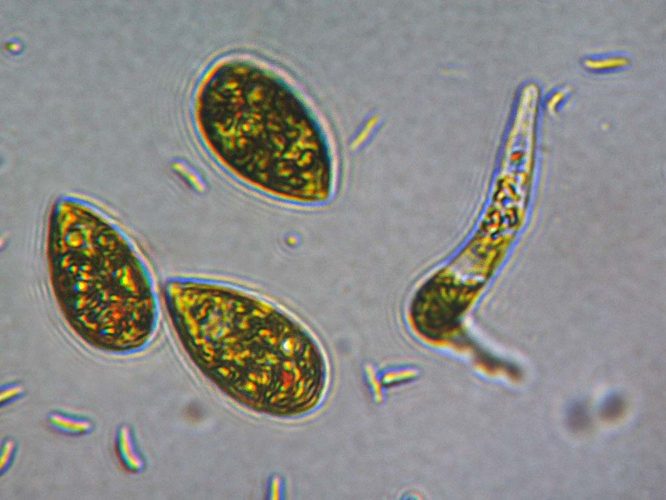
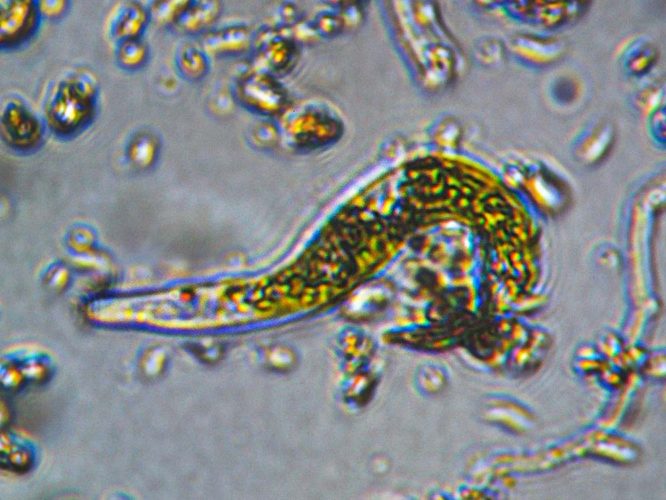
In the images above, you can also see prokaryotic organisms—cyanobacteria (small, rod-shaped bacteria). Another prokaryotic organism I found in the sample is this bacterium (not yet identified in more detail).
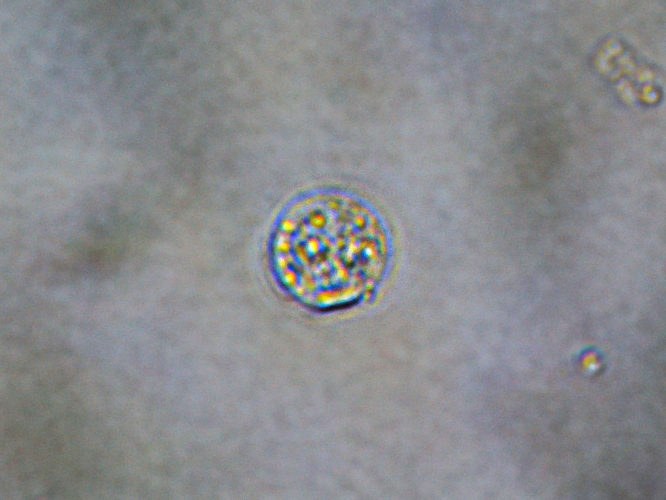
After about two weeks of observation, I even found ciliates in the sample. The first is a rotifer, and the second is an uroleptus.
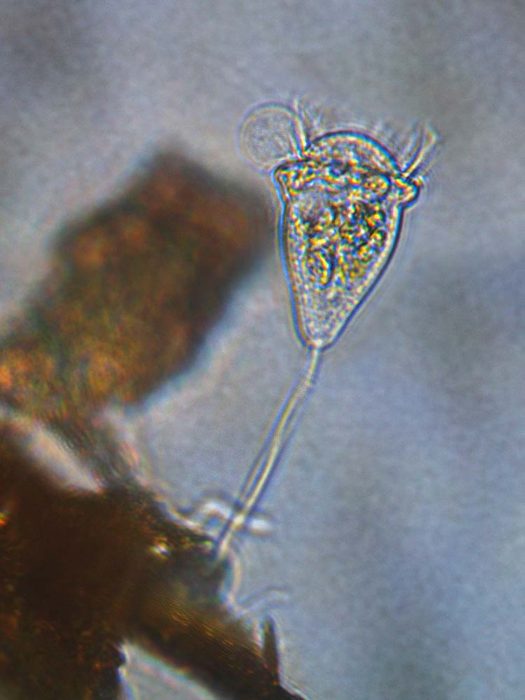
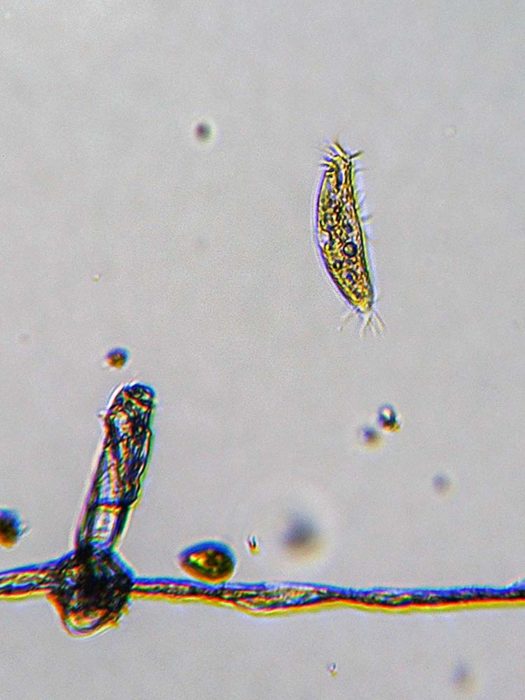
It is remarkable how many organisms can survive in such an extremely acidic environment. In my opinion, this refutes the claim that the water is sterile. It would therefore be appropriate to update the official information board and other tourist websites that have copied this information from it. However, these are likely far from all the organisms found in Hromnice Lake, and therefore it would be interesting to conduct further water analyses during other seasons, or to collect water samples from different depths (for example, anaerobic bacteria may live at the bottom due to a lack of oxygen and light).